KEYS
for canine and feline education
Welcome to Aïda DOG COACH's corner. Beyond training, I offer you a holistic approach based on a deep understanding of animal behavior and the strengthening of your unique bond. Whether you're looking for everyday solutions, advice during a difficult stage, or tools to better communicate with your companion.
Here you'll find a space of expert and caring support. Discover how, as a behaviorist educator, I can guide you and your animal toward lasting harmony.
Aïda Dog Coach E-learning: where understanding begins
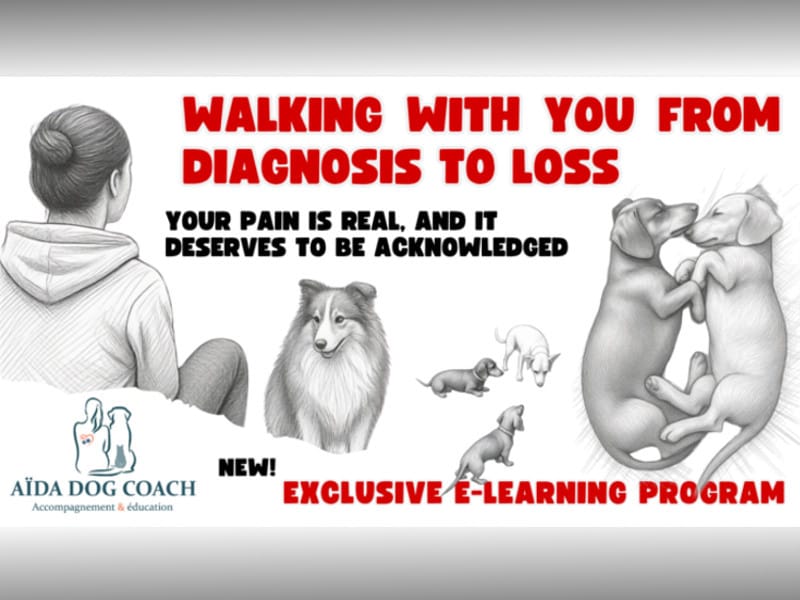
Complete programs to decode and transform your relationship.
Personalized, heartfelt coaching: a true and lasting bond
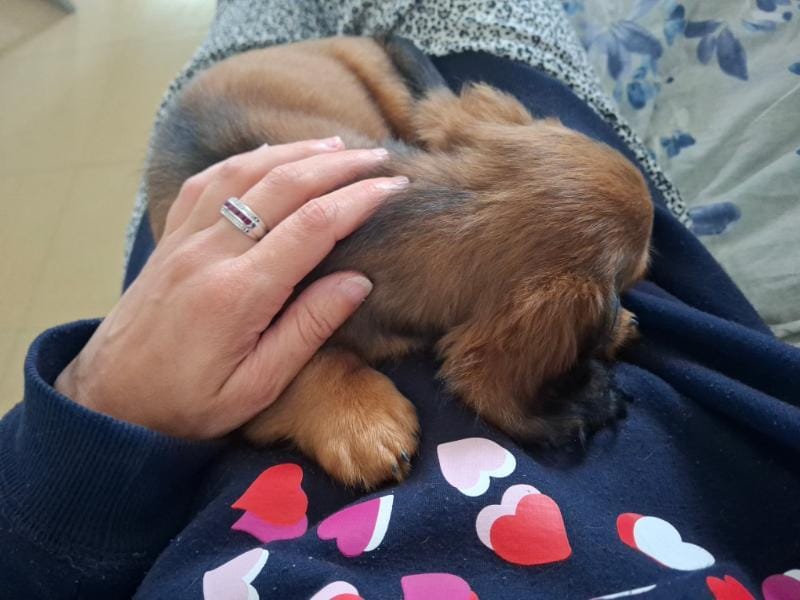
Canine and feline behavioral coaching -
Education, behavior, and emotional support
Shop: Thoughtful accessories for dogs and cats.

A wellness selection to strengthen your bond with your animal.
Welcome to the space where the bond between you and your animal takes center stage
On the 1st and 15th of every month, I share practical articles, reflections, and resources here to help you better understand your dog or cat — and the relationship you're building together.
Each article comes with reliable references and links to selected resources, because being well-informed is already a form of care.
The topics covered in this blog — animal behavior, attachment bonds, non-verbal communication, pet bereavement, the arrival of a puppy or a baby — are also the keywords woven throughout the entire Aïda Dog Coach website, so you can easily find me on Google exactly when you need to.
Beyond training. Towards true connection.
🐾 THE LANGUAGE OF BARKING: UNDERSTANDING BEFORE CORRECTING
1 June 2026
Does your dog bark constantly and you no longer know what to do? Before trying to correct this behavior, it's essential to understand what it's expressing.
🔬 BARKING IS NOT A WHIM
Barking is your dog's language — not a provocation. A barking dog is communicating. It can express anxiety, boredom, an alert, a need for contact, or a reaction to its environment. Each type of bark has its own tone and context.
💛 THE MOST COMMON CAUSES
Separation anxiety is one of the leading causes — your dog barks because it's distressed by your absence. Boredom is another: an understimulated dog tries to occupy itself however it can. Some dogs bark out of excitement, others out of fear or to defend their territory.
🌿 WHAT YOU CAN DO
Observe the context — is it always at the same time? In response to the same situation? This observation is already a first step toward understanding.
Avoid shouting to make it stop — your dog interprets this as if you were barking along with it. Stay calm; that's your first resource.
Identify the associated signals — posture, gaze, triggering context.
Create a soothing environment — appropriate stimulation, a reassuring presence.
📍 SUPPORT TAILORED TO YOU
If the barking is intense, frequent, or accompanied by other difficult behaviors, professional support can make all the difference. Whether you're in the Basque Country or on the other side of the world, Aïda Dog Coach support adapts to your situation. In person or remotely, we work together.
Find all my articles and resources on Le Coin d'Aïda Dog Coach every two weeks 🐾
🐾 THE HUMAN-DOG BOND: THE FOUNDATION OF EVERYTHING
15/06/2026
The bond between a dog and its human is far more than a simple companionship relationship. It's a genuine emotional attachment, recognized by science, resting on fascinating biological mechanisms.
🔬 THE SCIENCE OF THE BOND
When your dog looks into your eyes with softness, your brain — and theirs — releases oxytocin, the hormone of social bonding. This phenomenon, studied by Japanese researchers, brings the dog-human relationship closer to that between a mother and her child.
This isn't magic. It's chemistry, built over thousands of years of co-evolution between humans and dogs.
💛 AN ATTACHMENT THAT IS BUILT OVER TIME
This bond doesn't form instantly. It's woven day after day, interaction after interaction. Every shared moment of calm, every walk, every caring gesture helps strengthen this unique relationship.
A dog that feels safe with you develops what ethologists call a "secure attachment": it explores the world with confidence because it knows you are there as a solid base.
🌿 HOW TO NOURISH THIS BOND EVERY DAY
Here are a few simple yet powerful practices:
Practice soft mutual eye contact — a few seconds of eye contact releases oxytocin for both of you.
Respect their signals — when your dog looks away or moves off, honor that message.
Create rituals — a regular play session, a cuddle when you get home, a special weekend walk.
Be present — not just physically, but emotionally. Dogs sense your inner state.
📍 SUPPORT TAILORED TO YOU
Whether you're in the Basque Country or on the other side of the world, Aïda Dog Coach support adapts to your situation. In person or remotely, we work together to strengthen this precious bond between you and your dog.
Find all my articles and resources on Le Coin d'Aïda Dog Coach every two weeks 🐾
🐾 POSITIVE REINFORCEMENT: UNDERSTANDING TO USE IT WELL
28/06/2026
🐾 Positive Reinforcement: Understanding It to Use It Well
Positive reinforcement is at the heart of kind, effective education. But this term — often misunderstood — deserves a proper look.
🧠 What Is Positive Reinforcement?
In simple terms: adding something pleasant after a behavior to increase the likelihood that the behavior will happen again.
That "something pleasant" can be:
A treat
A toy
A stroke in just the right spot
An enthusiastic voice
The freedom to sniff or explore
🎯 What It Is Not
Positive reinforcement is not permissiveness. It's not "letting your dog do whatever they want." It's actively choosing what you want to reinforce — and doing so with precision and consistency.
A dog trained with positive reinforcement doesn't obey out of fear. They choose the right behavior because it's rewarding. That distinction changes everything in the quality of the relationship.
🌿 The Aïda Dog Coach Approach
At Aïda Dog Coach, positive reinforcement isn't just one technique among many. It's a philosophy. We believe the human-dog relationship must be built on trust, not control.
Find all our articles on Le Coin d'Aïda Dog Coach 🐾
🐾 SEPARATION ANXIETY: UNDERSTANDING IT TO HELP YOUR DOG THROUGH IT
19/07/2026
Coming home to a torn cushion, non-stop barking, or an accident on the floor is frustrating — and often misread. It's not revenge. It's real distress, and science now helps us understand it better.
🔬 WHAT'S ACTUALLY HAPPENING
Dogs are social animals, shaped by thousands of years of co-evolution with humans. When you leave, their attachment system switches on like an alarm: cortisol, the stress hormone, rises — bringing restlessness, vocalizing, or destructive behavior with it.
This isn't a training failure. It's a physiological response to a separation the dog experiences as a threat.
💔 A DISTRESS THAT BUILDS UP OVER TIME
Separation anxiety doesn't always appear overnight. It can develop after a change in routine, a move, a recent adoption, or an attachment that was never built on a stable foundation.
A dog who feels secure learns, over time, to stay alone without emotional collapse — but that's a skill built step by step, not an instinct.
🌱 A FEW WAYS TO EASE DEPARTURES
Here are some simple starting points to lower the tension:
Take the drama out of leaving — pick up your keys, put on your coat, without it always meaning you're about to disappear.
Break separations into small steps — leave for a few minutes, then gradually extend, to rebuild trust.
Create a reassuring space — a calm spot, a familiar scent, a low-key return ritual without over-the-top emotion.
Never scold after the fact — your dog can't connect a punishment to something they did earlier; it only adds anxiety on top of anxiety.
📍 SUPPORT TAILORED TO YOU
Whether you're in the Basque Country or on the other side of the world, Aïda Dog Coach support adapts to your situation. In person or remotely, we work together to understand where this anxiety comes from and build, step by step, lasting security for your dog.
Find all my articles and resources on Le Coin d'Aïda Dog Coach every two weeks 🐾
🛍️ SLEEPING WELL: THE ACCESSORIES THAT MAKE THE DIFFERENCE
02/08/2026
Sleep is a fundamental need for your dog — just as much as food and exercise. An adult dog sleeps between 12 and 16 hours a day! And the quality of that sleep depends largely on their environment.
😴 WHY SLEEP IS CRUCIAL
During sleep, your dog's brain consolidates the day's learning, the body recovers from physical exertion, and the immune system is strengthened. A poorly rested dog is often more irritable, less focused, and more reactive.
🛏️ THE IDEAL SLEEPING SPACE
A good sleeping space for your dog should be:
Comfortable — suited to their size and age
Quiet — away from traffic and noise
At a pleasant temperature — neither too warm nor in drafts
Personal — respected by the whole family, children included
🌿 THE EVENING ROUTINE
Just like us, dogs benefit from an evening routine: a final calm outing, a moment of relaxation, a reassuring space. These rituals prepare their nervous system for rest.
🛍️ OUR STORE: THE COLLAR THAT CREATES THE BOND
A collar is so much more than an accessory. It is the first visible link between you and your dog — the one the world sees, the one that says: "we are together."
At Aïda Dog Coach, we offer personalized collars with your dog's name and your phone number, designed to combine elegance, safety, and softness. Because a dog who feels good in their collar is a dog who feels good in their own skin.
🎀 And the little detail that makes all the difference? The bow tie is removable. Depending on the mood, the season, or the occasion, you choose the style. Your dog will have their own wardrobe — with the class you both deserve.
And if one day they wander a little too far… the number engraved on the collar will be there, discreet but reassuring, so someone can find you.
Find our personalized collars on Le Coin d'Aïda Dog Coach 🐾
LEARNING AT YOUR OWN PACE: THE POWER OF ONLINE E-LEARNING
15/08/2026
Canine education is no longer limited to Saturday morning classes. Today, you can learn at your own pace, from home, with resources designed to be accessible, practical, and transformative.
📚 WHY ONLINE E-LEARNING?
Online e-learning offers unique advantages for dog owners:
Flexibility — you learn when you want, at the pace of your life
Accessibility — wherever you are in France, Spain, or beyond
Depth — comprehensive content that goes far beyond simple "sit-stay"
Practicality — you apply it directly with your dog, in your daily life
🌿 THE AÏDA DOG COACH APPROACH
Our e-learning programs are built around one conviction: understanding your dog means loving them better. Each module integrates:
The foundations of canine behavior
Non-verbal communication
Positive reinforcement techniques
A holistic approach to animal wellbeing
🐾 "MY DOG CAN LEARN"
Our first online e-learning program — "My Dog Can Learn" — guides you through the fundamentals of kind education. Across 3 pre-recorded modules, you will learn to read your dog, communicate with them, and build a relationship based on trust.
Find all our e-learning programs on Le Coin d'Aïda Dog Coach 🐾
🛍️ BACK TO SCHOOL PREP: OUR STORE ESSENTIALS
30/08/2026
Back-to-school season is just around the corner! Here is our selection for navigating the change of pace with calm — for you and your dog.
🎀 OUR BACK-TO-SCHOOL PICK — THE PERSONALIZED COLLAR
Back to school is the perfect time for a fresh start — and with style. At Aïda Dog Coach, our personalized collar is this season's essential.
A collar is the first visible link between you and your dog. Ours is crafted with your dog's name and your phone number, so every walk feels safe and reassuring.
🎀 The bow tie is removable — change it depending on the mood, the season, or the occasion. Because your dog deserves a look as polished as yours.
And if they ever wander… that discreet number sewn into the collar can make all the difference.
🛍️ AÏDA DOG COACH ONLINE STORE
Find our personalized collar at
Find all our tips on Le Coin d'Aïda Dog Coach 🐾